Collector Guide Collecting & Commissions
Memorial Pet Portraits: Painting a Pet You Have Lost
When a companion has gone, a photograph on a phone can feel too small for what they meant. A memorial portrait in oils gives that memory a place in the home: a face you can look at every day, painted by hand with time and attention.
In this article
I paint memorial pet portraits in oils, in my studio in Florence, from the photographs you already have. You do not need perfect images, and you do not need to have everything decided. This guide explains how I look at older photographs, how we choose the moment the painting will keep, and how the work moves from your first message to the finished portrait.
What can a memorial portrait hold?
A memorial portrait is less about recording every hair than about keeping the animal you knew: the tilt of the head when you spoke, the way your dog waited at the door, the particular calm of a cat in its favourite place. Before thinking about size or background, think about the expression you most want to see again.
Some families want a quiet, dignified likeness. Others want a painting full of character, closer to the playful animal they remember. Both are possible. Tell me which feels right, and a little about your companion’s personality; it helps me read the photographs.
What if you only have a few photographs?
Many people have only a handful of images, often taken quickly on a phone, sometimes years ago. Send them all, including the ones you think are not good enough, and tell me which one feels most like your companion. For printed photographs, a flat, well-lit scan usually holds more information than a phone picture of the print.
I assess the material honestly before anything is agreed. A blurred or very small image may leave some features unclear, and I will tell you what the photographs can and cannot support. You do not have to judge that yourself. My guide to choosing a photo for a pet portrait explains what I look for.
Which pose and moment should the portrait keep?
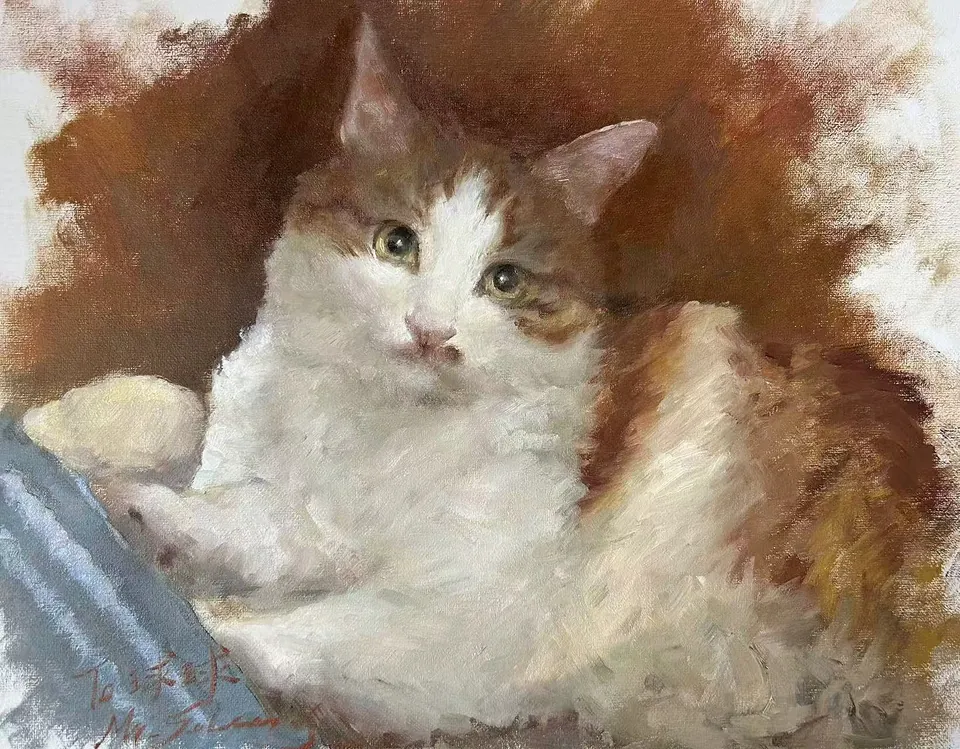
Usually one photograph becomes the main reference for the head, the gaze and the light, and others answer questions about markings, eye colour or the shape of an ear. If the photograph you love most shows the right expression but an awkward pose, say so; that is exactly what the composition study is for.
A portrait does not need to show your companion looking straight at the viewer. A side glance, a sleeping curl or a moment of watching something out of frame can feel more like them than a formal pose.
Can a collar, a favourite place or another detail be included?
Yes, small details often carry the most memory: a worn collar, a favourite blanket, the corner of a garden, a toy that was always nearby. Mention them in your first message, with photographs if you have them. We decide together what belongs in the painting, so that the details support the face rather than compete with it.
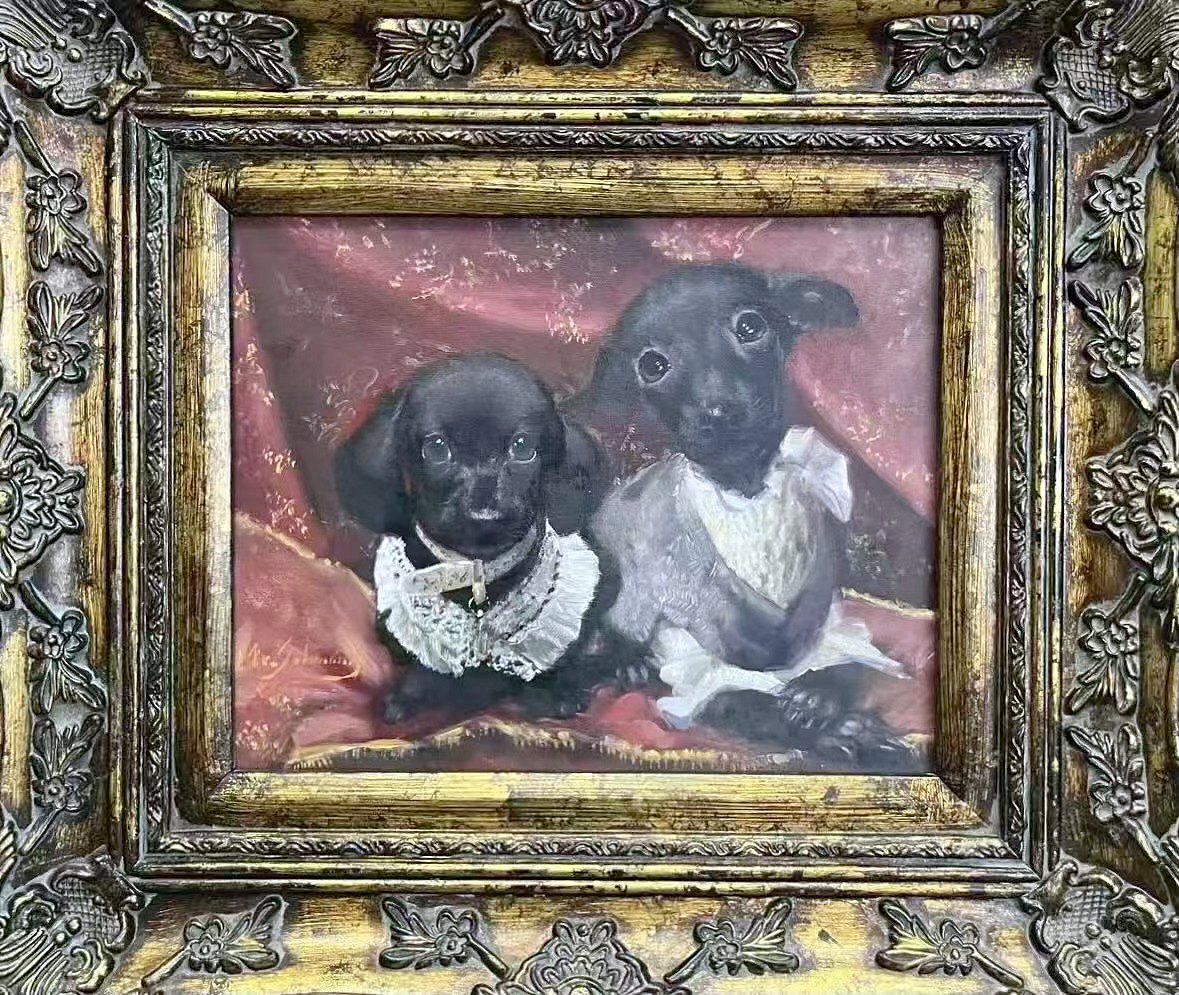
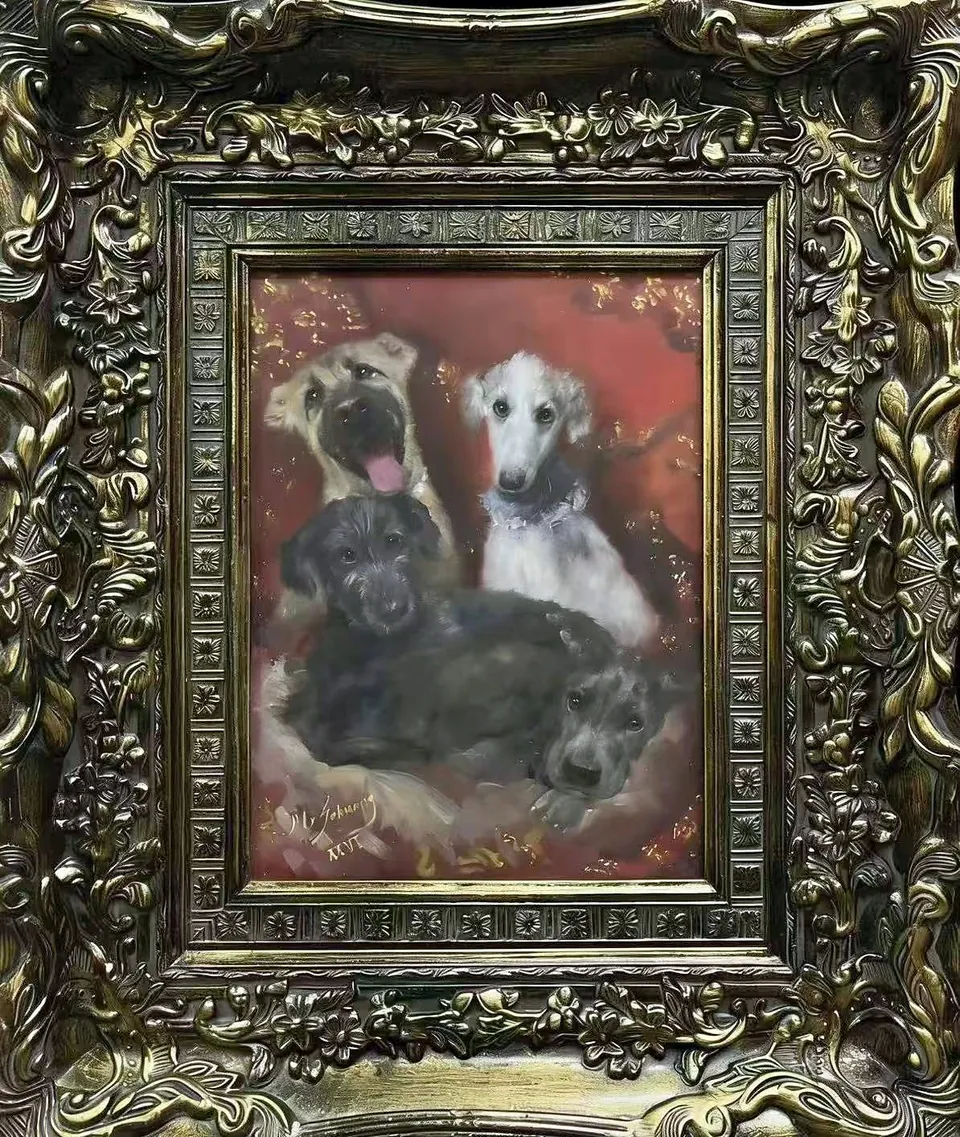
Two animals who shared a home can also be painted together, even from separate photographs, when the references allow the light and scale to be brought together convincingly. That is assessed case by case.
How does a memorial portrait come together?
The process is the same as for every pet portrait. You send your photographs and receive a personal quote before you decide. A 50% non-refundable deposit begins the work, and the remaining 50% is due after final approval, before shipping.
From your photographs I draw a portrait sketch to find your companion’s character. Then I prepare a composition study: the pose, the light and the setting. Any major change is made at this stage, before the painting begins. Once you approve the study, I paint the portrait by hand in oil and send you progress photographs along the way. After your final approval, the painting is varnished, packed with care and shipped to you. As a gift, you also receive a high-quality print of the portrait sketch, signed by me.
When should you get in touch?
Whenever you feel ready. Some people write soon after a loss; others wait months or years. If there is a date that matters, such as an anniversary or a birthday, mention it in your first message so that availability and the schedule can be confirmed individually.
You can see examples on my pet portraits page. When you are ready, send your photographs and a few words about your companion through the pet portrait inquiry.