Collector Guide Collecting & Commissions
Commissioning a Couple Portrait for an Anniversary
An anniversary can be a good moment to consider a portrait of two people together. The first question is what you would like the painting to preserve: a familiar expression, the ease of being beside one another, or a particular moment you both recognise. That gives the commission a useful starting point before decisions about size or setting.

In this article
- 01What should the portrait preserve?
- 02How do you choose a photograph of both people?
- 03How much of the setting should the portrait include?
- 04Which clothing and small details matter?
- 05What scale will suit the home?
- 06When should you mention the anniversary?
- 07What does the proposal confirm, and how does payment work?
- 08What should you send with your inquiry?
I paint couple portraits in my Florence studio. If you are considering an oil portrait for an anniversary, these are the choices worth thinking through before you send an inquiry. You can begin with an idea and a few photographs; the details can be discussed together.
What should the portrait preserve?
Think about how you recognise the two people as a couple. Perhaps it is the way they sit close together, a shared glance, or the calm of an ordinary afternoon. You do not need a long account of the relationship. A few words about the expressions or gestures that matter can help explain what you see in a photograph.
Consider the mood as well. A formal portrait in occasion clothing has a different presence from a relaxed composition in everyday clothes. Either may suit an anniversary. The choice depends on the people depicted and on the kind of painting they would enjoy living with.
How do you choose a photograph of both people?
A clear photograph of the couple together is a helpful place to begin. It shows the relationship between their positions, the direction of the light, and the space around them. Look for natural expressions in both faces. A picture that means a great deal to you may still need closer assessment if one face is very small, blurred, or hidden in shadow.
Soft daylight can make facial features easier to read. Check that both people are in focus and that strong filters have not changed their skin tones. When available, send the original image rather than a screenshot or a small version saved from social media. Open it at a larger size to see whether the details remain clear.
Several references can be considered together. If you prefer one person's expression in another photograph, explain that when you write. The possibilities depend on the material; combining separate images into a coherent composition needs discussion. You do not need to solve this yourself before contacting me.
How much of the setting should the portrait include?
The photograph helps begin the conversation about composition. A close view gives more space to faces and expressions. A wider view can include hands, posture, and something of the surroundings. Think about which elements carry the meaning you want to keep.
A particular room or place may be important, but consider how much of it the portrait needs. A detailed setting can draw attention away from the people. A quieter background can keep the emphasis on their faces and the way they occupy the space together.
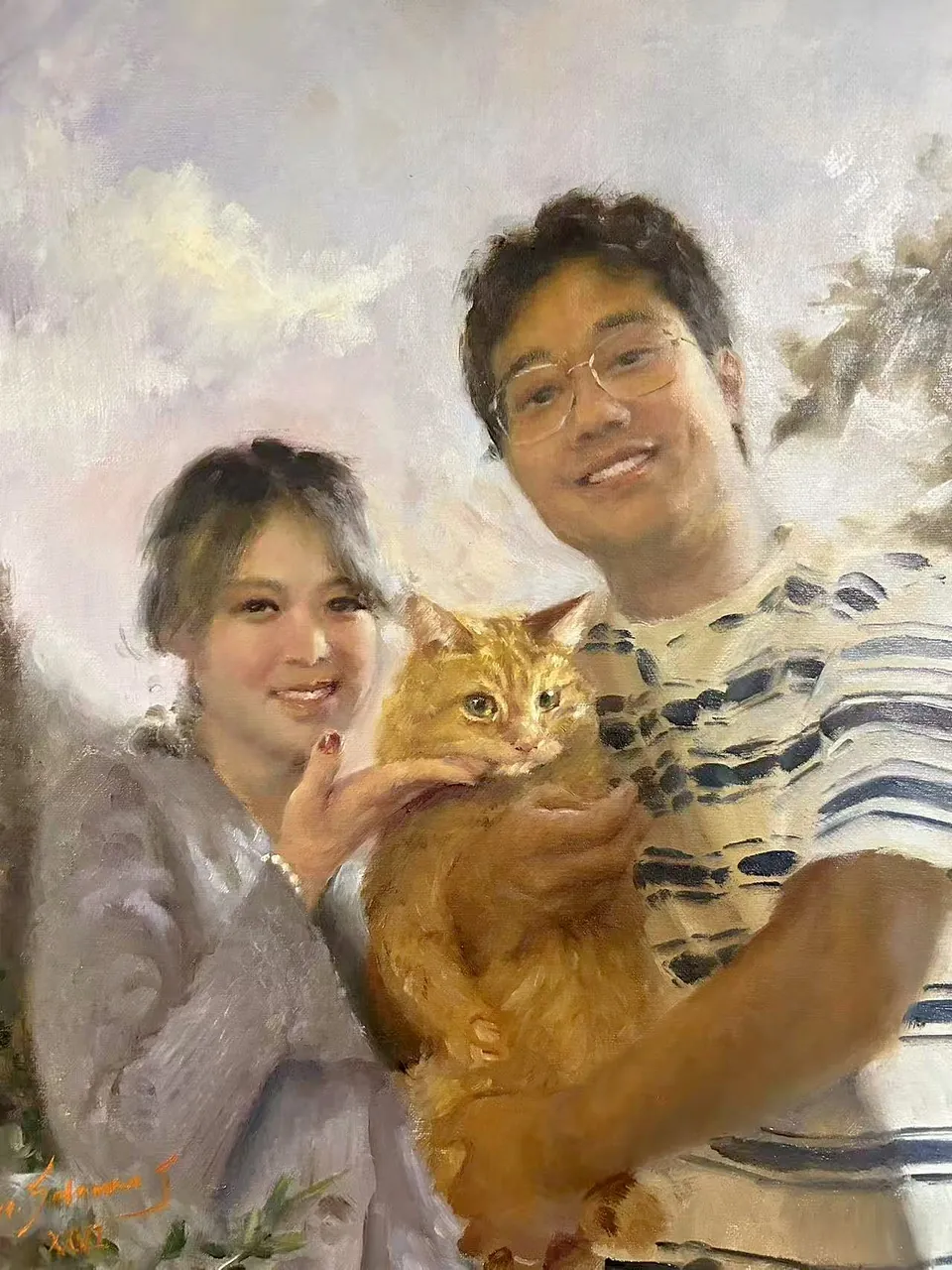
Bound by Grace, shown here, depicts a couple with a cat in oil on canvas. It offers one example of a composition that includes a companion animal. Your own portrait should be considered around its particular subjects and references.
Which clothing and small details matter?
Choose clothing that feels right for the people and the intended mood. Formal dress can connect the portrait to an occasion; familiar clothes can give it an everyday intimacy. Look at the colours together and at any patterns that attract attention before the faces do.
A ring, a piece of jewellery, or a particular garment may carry meaning. Mention it if it matters, and include a clear reference where possible. There is no need to collect every significant object into one painting. A small number of considered details can leave more room for the people themselves.
What scale will suit the home?
Before settling on dimensions, think about where the portrait might hang. A painting seen across a living room is experienced differently from one beside a reading chair. Note the available wall space, nearby furniture, and the distance from which it will usually be viewed.
Paper cut to a possible size can help you judge the presence of a painting on the wall. Remember that a frame adds to its overall dimensions. The proportions of the composition matter too: two figures close together may call for a different arrangement from two figures shown with more of their surroundings. Share the intended display location when you inquire, even if you have not chosen a size.
When should you mention the anniversary?
Availability and the expected schedule are confirmed in your proposal. Please mention any meaningful date when you get in touch. Feasibility needs to be established before you decide to proceed.
You do not need to be in Florence to discuss a commission. We can work from carefully selected photographs wherever you are based. Sittings in Florence can also be discussed. If you are planning a visit, mention it alongside the anniversary date so that the possibilities can be considered together.
What does the proposal confirm, and how does payment work?
The fee is quoted individually, according to the subject, size, and complexity of your painting. I provide a written proposal before you decide to proceed. It confirms the scope and practical arrangements, including the expected schedule and any framing or delivery considerations.
A 50% non-refundable deposit begins the work. The remaining 50% is due after final approval, before collection or shipping.
Collection or worldwide delivery can be arranged after final approval. Shipping, packing, insurance, customs duties, and taxes are excluded unless expressly included in the written proposal. Read the commission terms alongside your proposal so that the arrangements are clear before work begins.
What should you send with your inquiry?
A useful first message can include:
- Who the portrait is for and what you would like it to preserve
- A few clear photographs, with a note about the expressions you prefer
- Any clothing, setting, or details that are important
- The intended display location or a possible size
- The anniversary date and your city and country
You can explore my portrait commissions and share your idea from there. An initial inquiry is without obligation, and you do not need to have every decision made before we begin the conversation.