Collector Guide Caring for Original Art
How to Care for an Oil Painting
An oil painting can outlive everyone who has ever owned it — if it is hung, handled, and cleaned with a little knowledge. Here is the practical care guide I share with my own collectors.

In this article
At a glance
- Where to hang a painting — and the three places to avoid
- How to handle and hang it without stressing the canvas
- When gentle dusting is appropriate, and what never to put on paint
- What varnish does, and why revarnishing is a job for professionals
- The warning signs that mean calling a conservator
Hang it well: light, heat, and humidity
Where a painting lives matters more than almost anything else. Prolonged direct sunlight is the first thing to avoid: ultraviolet light fades pigments and heats the paint surface unevenly. A wall that receives soft, indirect daylight — or well-chosen artificial light — helps reduce light exposure, but no lighting arrangement can guarantee that colors will remain unchanged.
Heat is the second concern. Do not hang a painting directly above a working fireplace, a radiator, or a heating vent. Repeated cycles of heat dry the paint film and the canvas, and over time they encourage cracking. Humidity is the third: bathrooms, kitchens, and damp basement walls expose the painting to steam, grease, and moisture, all of which work their way into the canvas and the stretcher. A normal living room with stable conditions is ideal; extremes in either direction are what cause trouble.
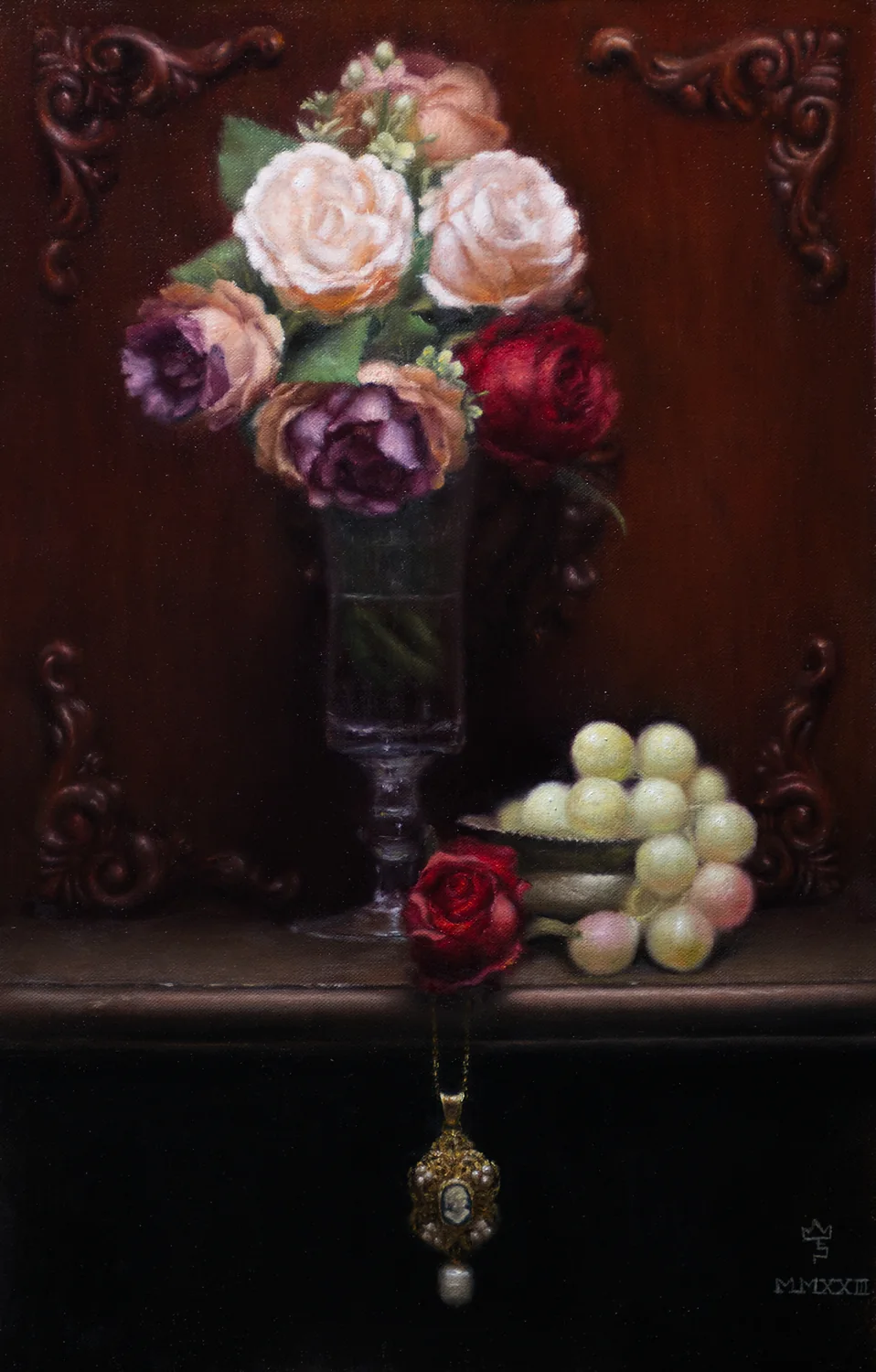
How to hang and handle an oil painting
Always lift a painting by its frame, never by pushing against the canvas itself — a thumb pressed into the back of a canvas leaves a dent that can be difficult to reverse. When moving it, carry it upright, holding the sides of the frame, and never lay it face-down on a rough surface.
For hanging, use two secure points rather than a single nail: D-rings or a properly rated wire distribute the weight and keep the painting level. Check the hanging hardware every year or two, especially for heavier framed works. And give the painting some breathing room — a hallway corner where bags and shoulders constantly brush past is not the place for an original.

How to clean an oil painting: dust gently, never scrub
Before dusting, check that the paint is dry, stable and intact. Do not brush a surface with loose or flaking paint, or a matte, powdery or otherwise fragile finish. If you are unsure, leave it untouched and ask a qualified paintings conservator. On a sound surface suitable for dusting, use a clean, very soft, dry brush with a light touch; never scrub. See the Smithsonian guidance on caring for paintings for the precautions.
Well-meant cleaning can damage an oil painting. When in doubt, leave the surface untouched and ask a conservator.
What you should never do matters more than what you should. Never use water, sprays, glass cleaner, or household cleaning products on the paint film. Never try to "refresh" a dull-looking surface with oils, polishes, or furniture wax. And never scrub at a mark or stain — if something is on the painting that dusting will not remove, that is a matter for a conservator, not for a cloth.
Above a working fireplace
Heat and soot age a painting faster than almost anything else in a home.
Water, sprays, or cleaners
Household products dissolve varnish and stain paint. Keep them far from the surface.
Bare fingers on the paint
Skin oils leave residues that attract grime. Handle the frame, not the canvas.
A DIY revarnish
Amateur varnish layers yellow unevenly and are difficult to remove. Leave this to professionals.
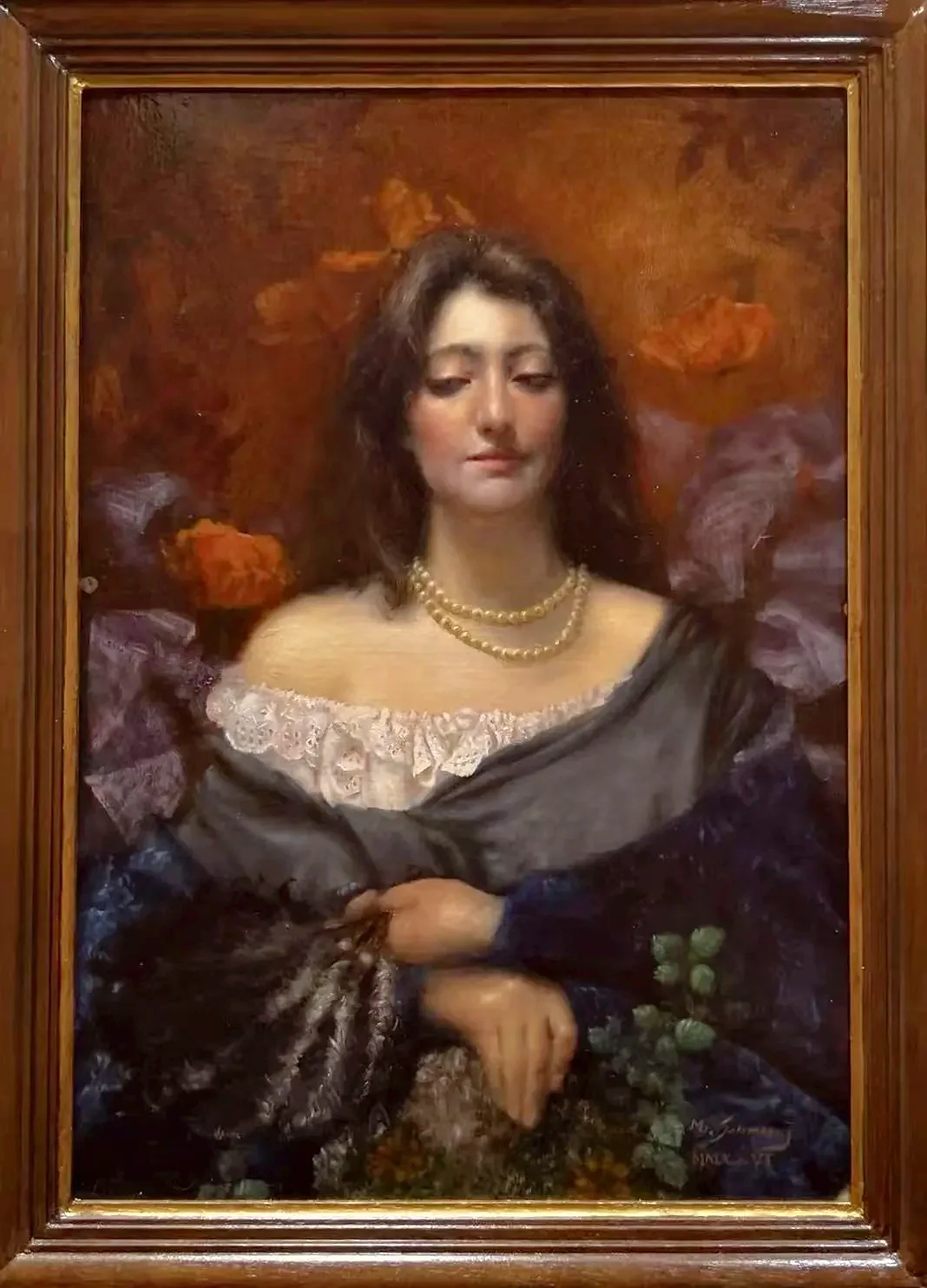
Varnish, aging, and patience
A finished oil painting is usually protected by a layer of varnish. Varnish saturates the colors, unifies the surface sheen, and takes the environmental wear so the paint does not have to. Over many years it may mellow slightly in tone — this is normal, and it is one reason varnish exists as a sacrificial layer that a conservator can one day renew.
What varnish does not need is your intervention. Do not apply fresh varnish yourself, and do not try to remove old varnish with solvents. Both are irreversible processes that belong in a conservator's studio. Your part is simply to give the painting stable surroundings and leave the chemistry to the professionals.
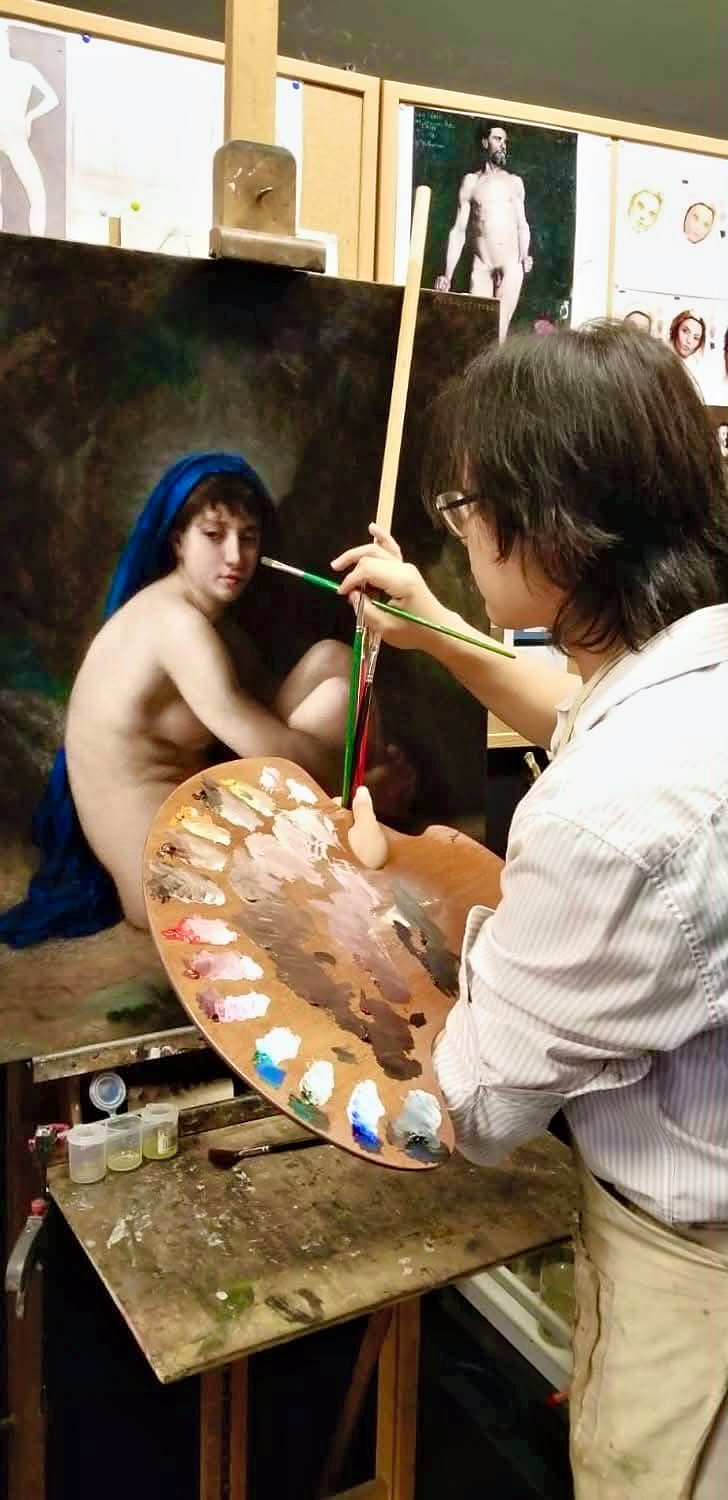
When to call a conservator
Some conditions are beyond home care: paint that is flaking or lifting, a tear or puncture in the canvas, deep cracking, a whitish bloom across the surface, or damage from water. In these cases, do not attempt repairs with glue, tape, or touch-up paint — improvised fixes almost always complicate the professional restoration that follows.
A trained paintings conservator can stabilize flaking, clean grime safely, and renew varnish without harming the original paint. If the painting came from my studio, write to me first: I keep records of the materials used in each work, and I can advise whether it needs a conservator or simply reassurance.
How to Choose an Original Painting for Your Home
A practical guide for choosing paintings that belong in a room.
How to Commission a Classical Oil Portrait in Florence, Italy
Understand how observation and proportion support portrait likeness.